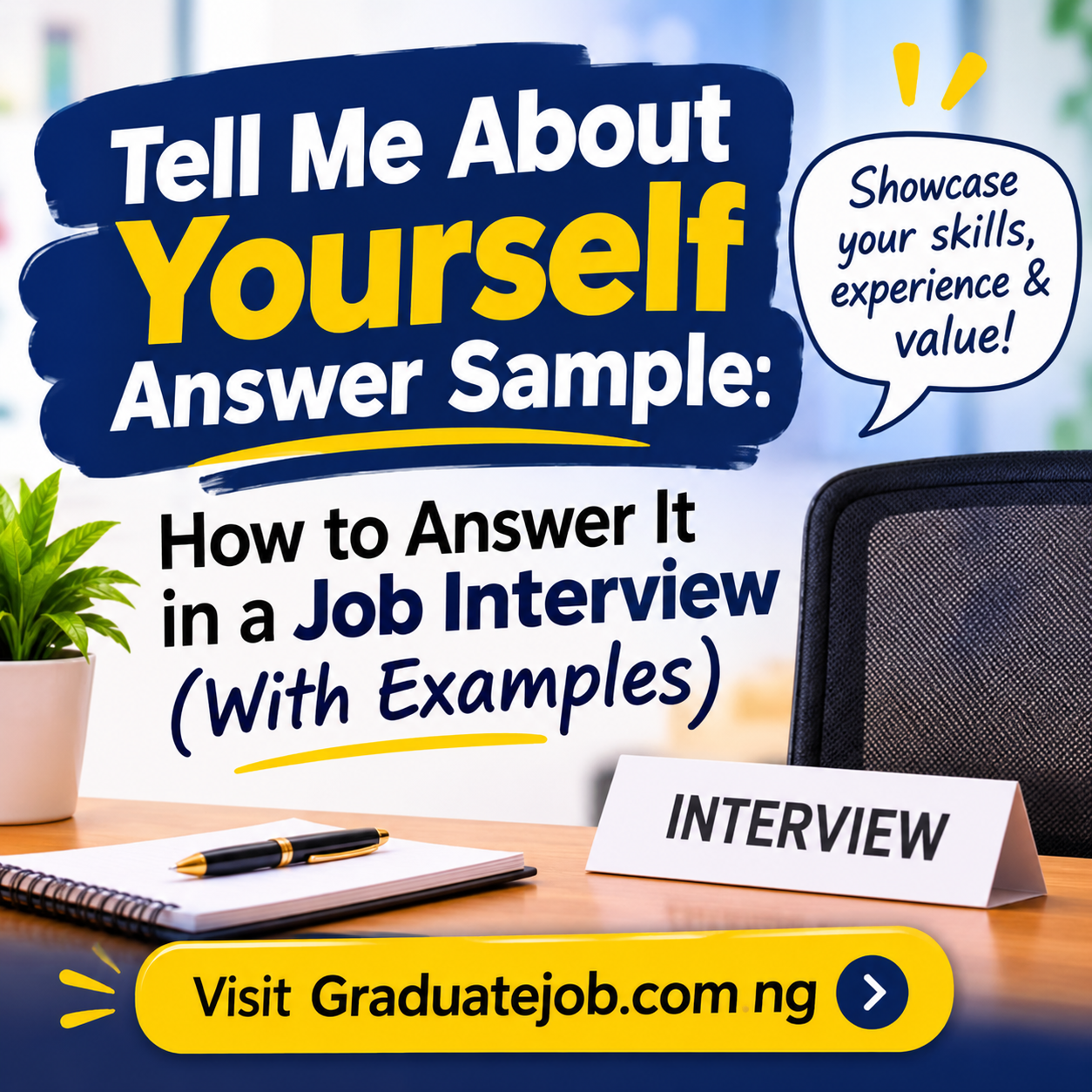
How do you answer “tell me about yourself” in an interview?
To answer “tell me about yourself,” give a 60–90 second summary covering three things: your current role or situation, the past experience that prepared you, and why you want this job. This is called the Present-Past-Future formula. Keep it professional, relevant to the role, and focused on achievements rather than your life story.
Why Do Interviewers Ask “Tell Me About Yourself”?
This is usually the first question, so it sets the tone. Interviewers use it to:
- Check whether your background fits the role
- Assess how clearly you communicate
- Learn what you consider your most important strengths
- Decide which follow-up questions to ask
It is not an invitation to recite your CV or share personal history. It is a chance to deliver a short, targeted pitch.
The Present-Past-Future Formula (Step by Step)
1. Present (20–30 seconds): State your current job title, years of experience, and one or two key responsibilities or wins.
2. Past (20–30 seconds): Highlight earlier experience, skills or achievements that connect directly to the new role. Choose only what is relevant.
3. Future (15–20 seconds): Explain why this role and company excite you, and what you want to contribute.
Tip: Read the job description first and mirror its key skills in your answer. This shows fit immediately.
Tell Me About Yourself Answer Sample: 3 Examples
Sample 1: Experienced professional (Marketing)
“I’m a digital marketing manager with six years of experience, currently leading a team of four at a SaaS company. Over the past two years, I’ve grown our organic traffic by 120% and cut customer acquisition costs by 18%. Before that, I worked as a content strategist, where I built my foundation in SEO and analytics. I’m now looking for a role where I can own a larger strategy, and your focus on data-driven growth is exactly why this position appeals to me.”
Why it works: It uses numbers, moves in a clear timeline, and ends by linking to the company.
Sample 2: Entry-level or fresh graduate
“I recently graduated with a degree in business administration, where I specialized in finance. During my final year, I completed an internship at a local bank, helping analyze customer data and prepare weekly reports that the team used for decision-making. I also led a university project that won first place in a case competition. I’m eager to begin my career in financial analysis, and I’m excited about this role because of your structured graduate training programme.”
Why it works: With limited work history, it draws on internships, projects and academic achievements.
Sample 3: Career changer (Teaching to HR)
“For the past five years, I’ve worked as a secondary school teacher, where I managed 120 students, designed training materials and mediated conflicts between students and parents. Last year, I completed an HR certification and began volunteering as a recruitment coordinator for a local non-profit. Those experiences showed me I enjoy developing people and building strong teams. I’m now looking to move into HR, and I believe my communication and training skills would help me contribute from day one.”
Why it works: It frames the old career as a source of transferable skills and shows proactive steps toward the new one.
Tips for a Strong Answer
- Keep it to 60–90 seconds. Anything longer risks losing attention.
- Quantify results. Figures such as “increased sales by 25%” are more memorable than general claims.
- Tailor it to the job. Never use the same script for every interview.
- Sound conversational. Practise aloud, but avoid memorising word for word.
- End with enthusiasm. Finish by connecting your goals to the role.
Common Mistakes to Avoid
- Reciting your CV. The interviewer has already read it.
- Sharing personal details. Age, marital status, religion or family details are unnecessary.
- Being too vague. “I’m hardworking and a team player” means little without proof.
- Criticising a past employer. It raises red flags.
- Rambling. Structure prevents this.
How to Adapt Your Answer for Different Interview Types
- Phone or video interviews: Keep it slightly shorter and clear, since there is less body language to support you.
- Panel interviews: Make eye contact with everyone, not only the person who asked.
- Senior roles: Emphasise leadership, strategy and business impact.
- Creative roles: Mention a standout project or portfolio piece.
Frequently Asked Questions
How long should a “tell me about yourself” answer be?
Aim for 60 to 90 seconds, which is roughly 150 to 200 words. Go slightly shorter for phone screenings.
Should I include personal information?
Only if it is relevant and professional, such as a hobby that supports the role. Keep the focus on your career.
What if I have no work experience?
Use education, internships, volunteering, school projects and relevant skills. Show enthusiasm and willingness to learn.
Is it okay to prepare a script?
Prepare key points and practise them, but don’t memorise a script. A natural delivery builds trust.
What is the best formula for this question?
The Present-Past-Future formula is widely recommended because it is simple, logical and easy to tailor to any role.
Final Thoughts
A strong “tell me about yourself” answer is short, relevant and confident. Use the Present-Past-Future formula, borrow from the sample answers above, and adapt them with your own achievements. Practise aloud a few times, and you’ll start your next interview with a clear advantage.




1 comment
Очень помогли с подбором аналогов редких сплавов под наши технические требования.
https://telegra.ph/Rulon-alyuminievyi-11-02